
Match overview
Get a quick view of overall alignment, then move past the number into the reasons behind it.
Resume and job description matcher
Paste the role and compare it with your resume. See matching skills, missing keywords, weak evidence, and honest edits to make before you apply.
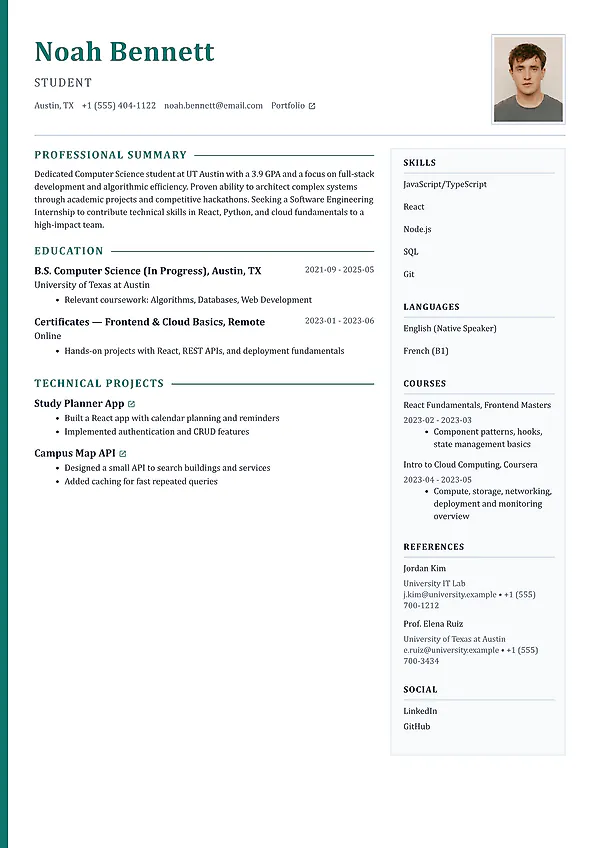
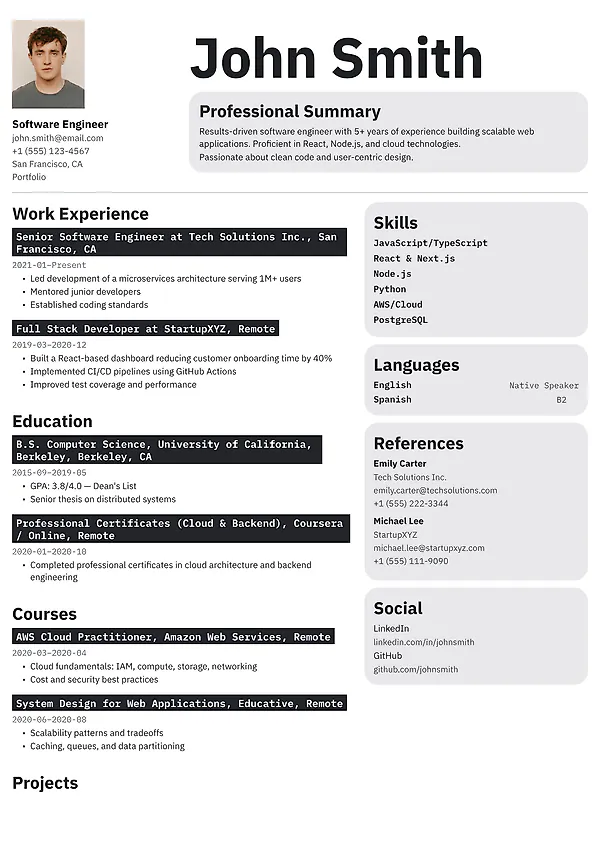
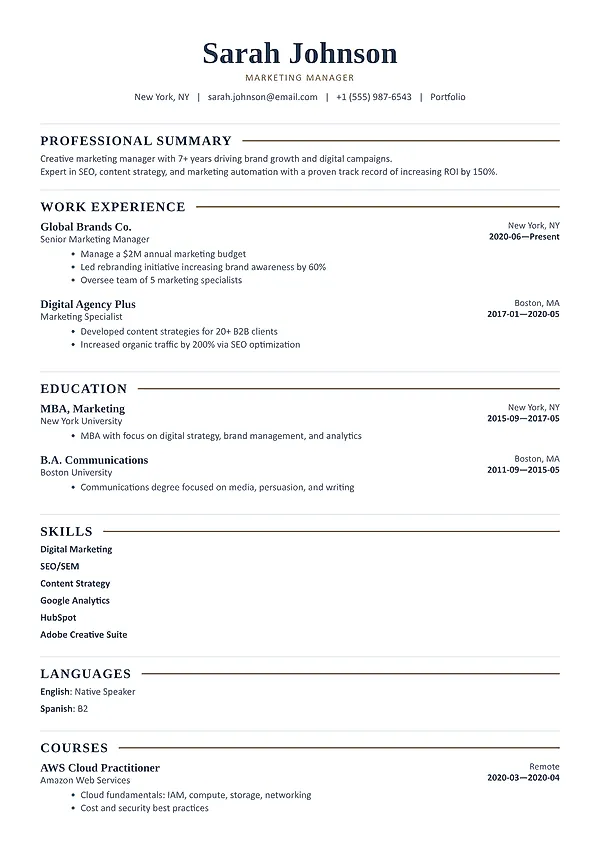
Understand whether the resume fits. Compare the role's responsibilities and requirements with evidence already present in your resume.
Separate language gaps from skill gaps. See when the experience exists under different wording—and when a requirement is genuinely missing.
Make changes you can defend. Update the summary, skills, and experience without copying the posting or inventing qualifications.
Resume compatibility explained
A useful comparison is not a keyword-counting contest. It connects the employer's requirements to visible evidence in your resume and tells you which gaps can be fixed with clearer language, stronger proof, or new experience.
Confirm the important skills, tools, responsibilities, outcomes, and seniority signals that already match the role.
Find relevant experience that uses different language and make it easier for an ATS or recruiter to recognize.
Identify skills that are listed without evidence, then support them with a real project, action, responsibility, or result.
Treat qualifications you genuinely lack as development gaps—not keywords to paste into the resume.
A report you can act on
Review the overall alignment, then inspect the skills, language, responsibilities, and proof behind it. Each recommendation should lead to a credible edit or an honest decision not to make one.
Get a quick view of overall alignment, then move past the number into the reasons behind it.
See which important terms are present, absent, or represented through different language.
Connect the role's responsibilities with the experience, projects, and achievements that support them.
Find bullets that name a task but do not yet show ownership, scale, complexity, or result.
Focus on the most important accurate updates instead of trying to rewrite every line.
Improve summaries and bullets in the same context as the job you are targeting.
How it works
Use the complete resume and job posting, understand each gap before editing, and recheck the final document for accuracy and natural language.
Use your current job-ready version so the analysis reflects what a recruiter or applicant tracking system would actually receive.
Include responsibilities, required and preferred qualifications, tools, outcomes, and company context—not only the job title.
Separate missing wording, hidden relevant experience, weak proof, and genuine skills or experience you do not yet have.
Update the most relevant sections, remove unsupported claims and repetition, then review the full resume before applying.
More resume and career tools
Compare your resume with a job description, create an editable cover letter, and generate interview questions for the target role.
Frequently asked questions
Learn what the tool creates, what information it checks, how to use it, and which results require your review.
Compare the role's core responsibilities, required skills, tools, outcomes, and experience level with specific evidence in your resume. Compatibility is strongest when the important requirements are easy to find and supported by real work—not simply repeated as keywords.
Use the complete resume you plan to submit and paste the full job posting. Review matching strengths first, then group the gaps into different wording, weak visibility, weak evidence, and qualifications you genuinely do not have. That classification tells you what can be improved honestly.
No. Add a missing term only when it accurately describes a skill, tool, responsibility, or result you can support. If the experience exists under different wording, clarify it. If the experience does not exist, leave the keyword out and treat it as a real skills gap.
Do not claim it. Look for honest adjacent or transferable experience, decide whether the skill is essential to the role, and be ready to explain how you would learn it. Some preferred requirements are negotiable; central required qualifications may signal that another role is a better fit.
The comparison identifies the sections that need attention and supports guided rewrites for relevant summaries and experience bullets. You decide which suggestions to keep, and every final statement should reflect work you actually performed.
No. A match score is a directional measure, not an ATS simulation or interview guarantee. Applicant tracking systems, recruiter decisions, competition, location, timing, and employer-specific screening rules all affect the outcome.
Yes. After matching the resume, use the same resume and job description to identify likely interview topics. Prepare truthful examples for the role's main skills, responsibilities, tradeoffs, outcomes, and any gap an interviewer may ask about.
Tailor it for roles you seriously want, especially when the responsibilities or terminology differ. Keep a complete base resume, create a separate version for each target job, and change relevance and emphasis without changing the underlying facts.
Free to start
Upload the resume, paste the full job description, review strengths and gaps, and make accurate changes before you apply.