
AI professional summary generator
Generate a resume summary from your experience level, job title, skills, achievements, and target role.
AI resume builder
Use the AI resume writer to generate a professional summary, write experience bullet points, improve existing content, and tailor your resume to a job description. Every suggestion is editable.
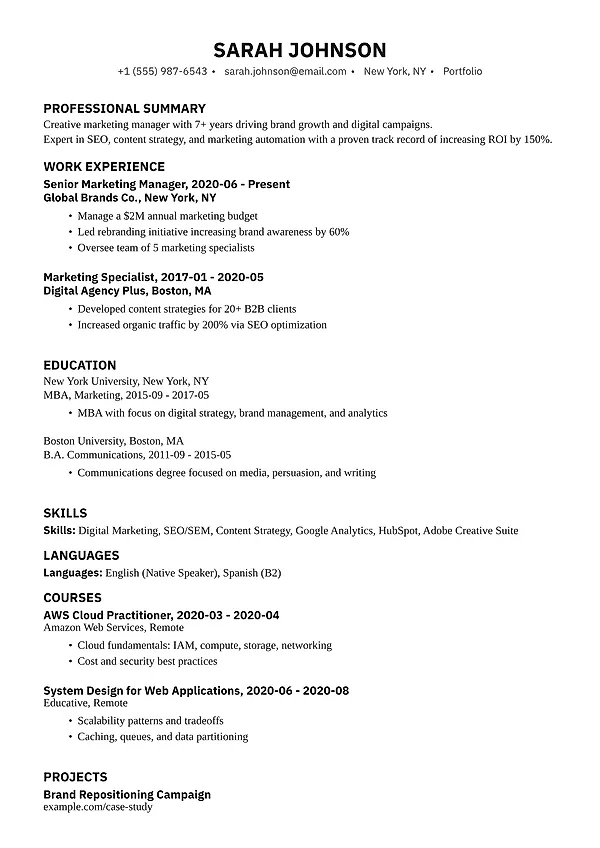
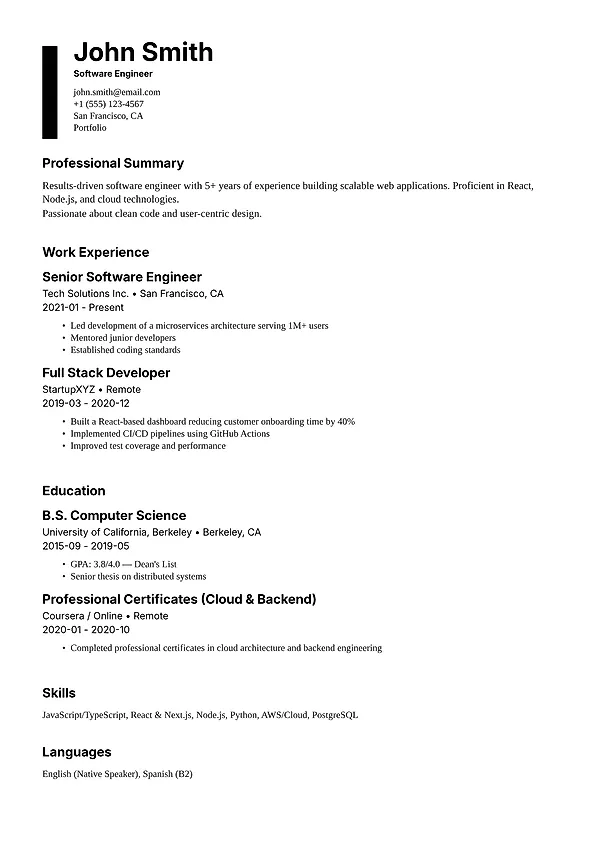
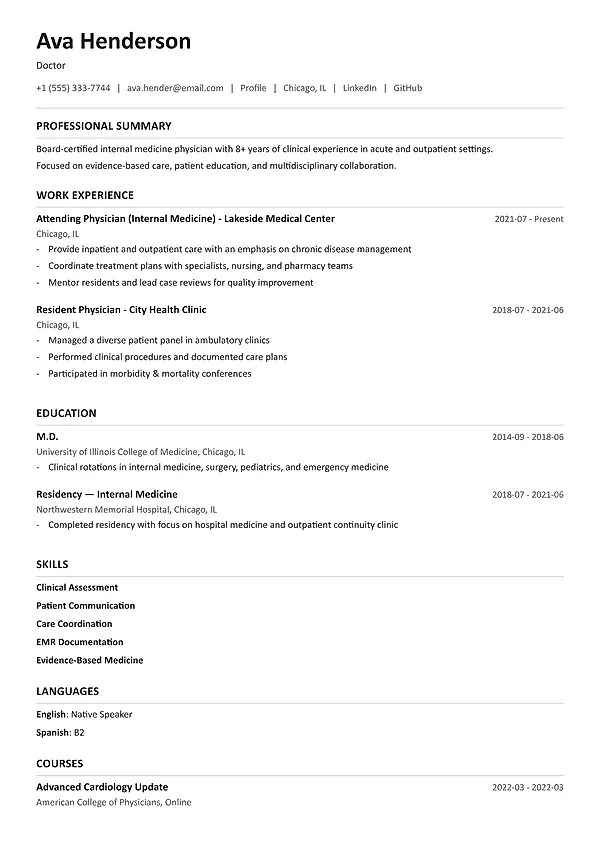
Generate a resume summary. Use your job title, skills, experience level, and target role.
Write resume bullet points. Turn responsibilities and achievements into editable experience content.
Tailor content to a job. Update your summary, skills, and bullet points for a job description.
AI resume writer
Enter your job title, responsibilities, skills, projects, achievements, and target role. The AI resume builder turns that information into editable content for your resume or CV.
Enter the responsibilities, projects, tools, actions, and results you want the resume to include.
Generate a professional summary for your experience level, skills, and target job title.
Rewrite experience bullet points with clearer actions, responsibilities, and measurable results.
Review and edit every AI suggestion before adding it to the final resume.
AI tools for every resume section
Generate a professional summary, create experience bullet points, rewrite existing resume content, and tailor important sections to a job description.
Generate a resume summary from your experience level, job title, skills, achievements, and target role.
Turn responsibilities and achievements into editable experience bullet points with actions and results.
Rewrite existing summary or experience content in a concise, direct, technical, or leadership style.
Use a job description to update the summary, skills, and experience content for a specific position.
Add useful details such as tools, team size, project scope, customers, revenue, time saved, or other results.
Keep, change, or reject every generated sentence before adding it to your resume or CV.
How it works
Enter your job information, choose the resume section to write, generate content, and edit every suggestion before downloading the resume.
Add your job title, responsibilities, projects, tools, skills, achievements, and measurable results.
Generate a professional summary, create experience bullet points, or rewrite content already in your resume.
Remove inaccurate statements, add missing details, and keep only wording that correctly describes your work.
Compare the resume with a job description and update relevant summaries, skills, and bullet points without keyword stuffing.
More resume and career tools
Compare your resume with a job description, create an editable cover letter, and generate interview questions for the target role.
Frequently asked questions
Learn what the tool creates, what information it checks, how to use it, and which results require your review.
It can generate content for each resume section, but the final result still needs your facts and review. Check every summary, bullet point, skill, date, and achievement before downloading the resume.
Do not use invented metrics. If a suggestion includes a placeholder or an unsupported figure, replace it with a verified number or describe the outcome honestly without one.
Provide context before asking for a rewrite: team, audience, scale, problem, constraints, action, and outcome. Then remove adjectives and keep the details that only someone who did the work would know.
Yes. It can help identify transferable skills and reframe relevant experience, but it should not disguise gaps or claim direct experience you do not have. Clear translation is useful; false equivalence is not.
ATS readability depends on both content and formatting. Use clear section titles, text-based templates, relevant terminology, and a standard PDF. AI can help with wording, but it cannot guarantee screening results.
Free to start
Enter your experience, generate a professional summary and resume bullet points, then edit every suggestion before adding it to your resume.