
Resume score and overview
See the current strength of the document, then review the checks behind the number.
Free ATS resume checker
Upload the resume you plan to send and review its ATS readability, structure, writing, and achievement evidence. Fix the base document first, then compare it with a job description to find relevant keyword, skill, and proof gaps.
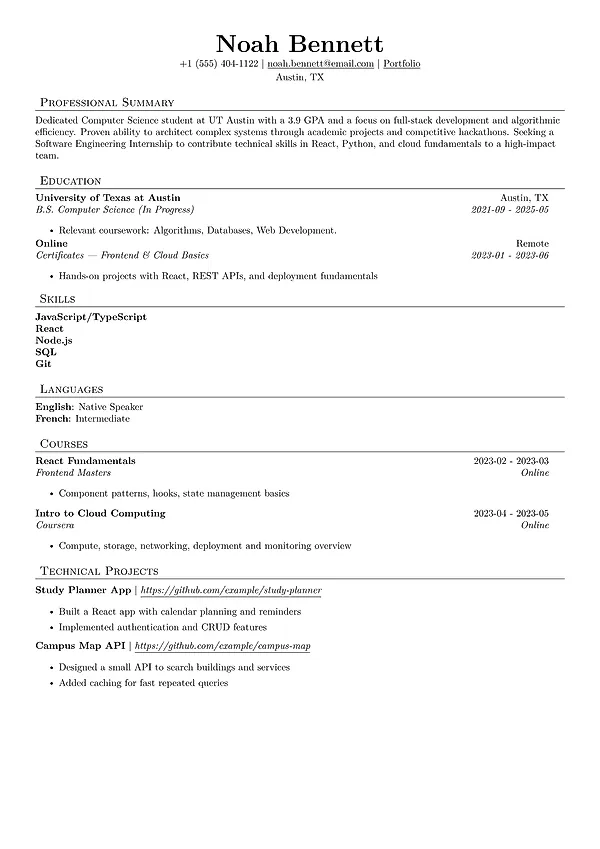
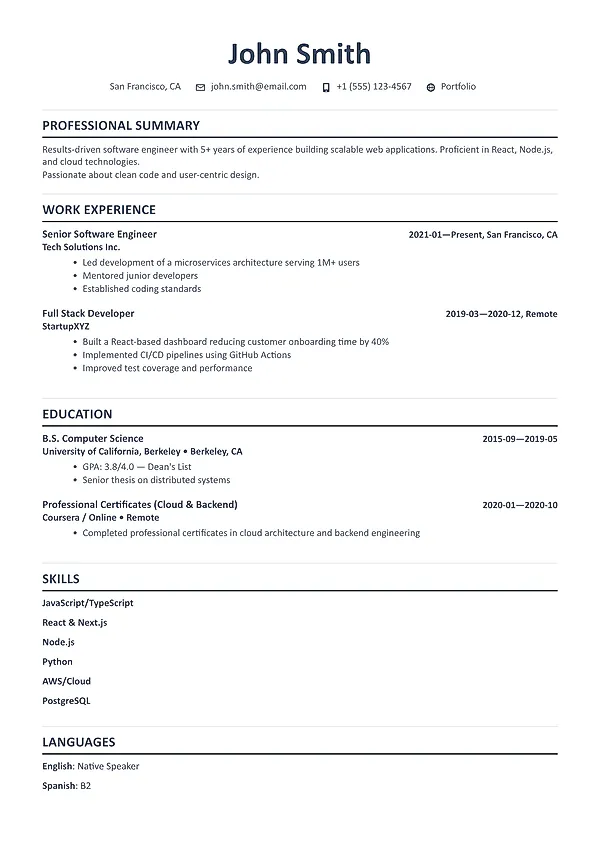
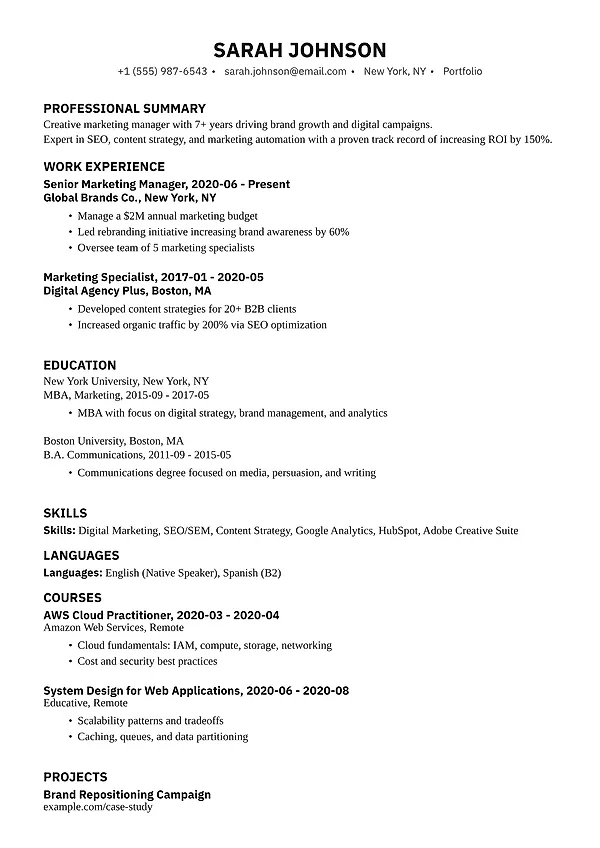
Check the base resume. Review readability, section structure, content completeness, writing, and achievement evidence.
Compare it with the job. Use the separate job matcher to check role-specific skills, terminology, responsibilities, and proof.
Make honest improvements. Clarify experience you genuinely have instead of copying keywords or claiming missing qualifications.
Understand the resume score
A general ATS resume check and a job-description match answer different questions. First make the document readable, complete, and credible. Then evaluate whether it shows the skills and evidence a specific role requires.
Check whether the file uses readable text, recognizable headings, a clear section order, and consistent formatting.
Find vague summaries, responsibility-only bullets, repeated language, and achievements that need stronger evidence.
Treat the resume score as a diagnostic summary—not a prediction of how every employer or ATS will respond.
Run a separate job match before applying so missing terminology is not confused with missing experience.
Resume analysis you can use
Use the report to diagnose the document itself: ATS readability, section coverage, writing clarity, consistency, and the strength of the evidence behind your claims. Each finding should lead to a specific review or edit.
See the current strength of the document, then review the checks behind the number.
Review text, headings, structure, reading order, and other common formatting risks.
Check contact details, summary, experience, education, skills, and supporting sections for useful coverage.
Find experience bullets that describe a task without showing ownership, scale, result, or why the work mattered.
Spot vague phrasing, repetition, unnecessary buzzwords, and sections that need a more specific rewrite.
Work through the most important credible improvements instead of reacting to a single opaque score.
How it works
This two-stage workflow separates universal resume problems from role-specific gaps, making the recommendations clearer and reducing unnecessary keyword changes.
Use your current resume—not an older draft—so the score and findings reflect the document an employer would receive.
Review ATS readability, section structure, completeness, consistency, writing quality, and achievement evidence instead of chasing one number.
Correct missing or confusing details, strengthen supported achievements, and keep every skill, result, and responsibility accurate.
Paste the full job description into the job matcher to find matching skills, missing language, proof gaps, and genuine qualification gaps.
More resume and career tools
Compare your resume with a job description, create an editable cover letter, and generate interview questions for the target role.
Frequently asked questions
Learn what the tool creates, what information it checks, how to use it, and which results require your review.
Check that the resume uses readable text, familiar section headings, a logical reading order, consistent dates and titles, and restrained formatting. The ATS report helps identify common risks, but no checker can reproduce every employer's software or configuration.
First check the resume's general quality, then run a job-description match. Review whether the resume clearly supports the role's central skills, responsibilities, tools, and level of ownership. Compatibility is evidence-based alignment, not merely repeating the same words.
Use important terminology from the job description only when it accurately describes your experience. If you used an equivalent tool, method, or responsibility under different wording, clarify that evidence naturally in the summary, skills, or experience section.
No. Add a skill only when you can support it with real work, education, a project, certification, or a credible adjacent capability. Leave genuine gaps visible rather than creating claims you could not explain in an interview.
It is a directional summary of the checks performed on the document. Use the detailed findings to decide what to fix; the score is not a hiring probability, a universal ATS pass mark, or a guarantee of an interview.
No. The ATS checker reviews the resume's general readability, structure, content, and consistency. The job matcher compares that resume with one specific job description to identify matching requirements, missing terms, weak proof, and real experience gaps.
Yes. Use the prioritized findings to update the resume in the builder, check the revised document again, and then compare it with the target job before downloading the final PDF.
Free to start
Check the current resume, work through the prioritized findings, and then compare the improved version with the job description for an honest view of fit.