
Cover letter from your resume
Use job titles, skills, experience, and achievements already included in your resume.
AI cover letter builder
Use your resume and the job description to generate an editable cover letter. Choose a professional template, edit every paragraph, and download the cover letter as a PDF.
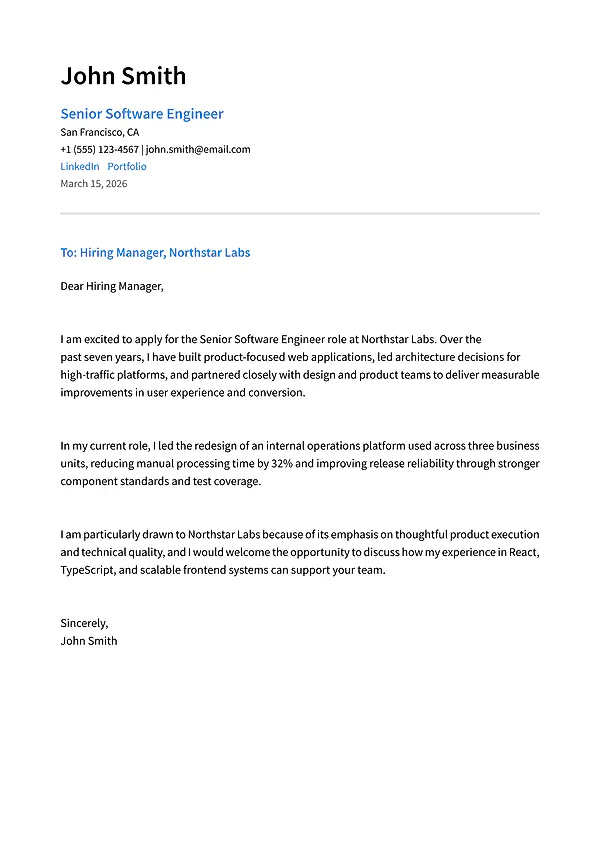
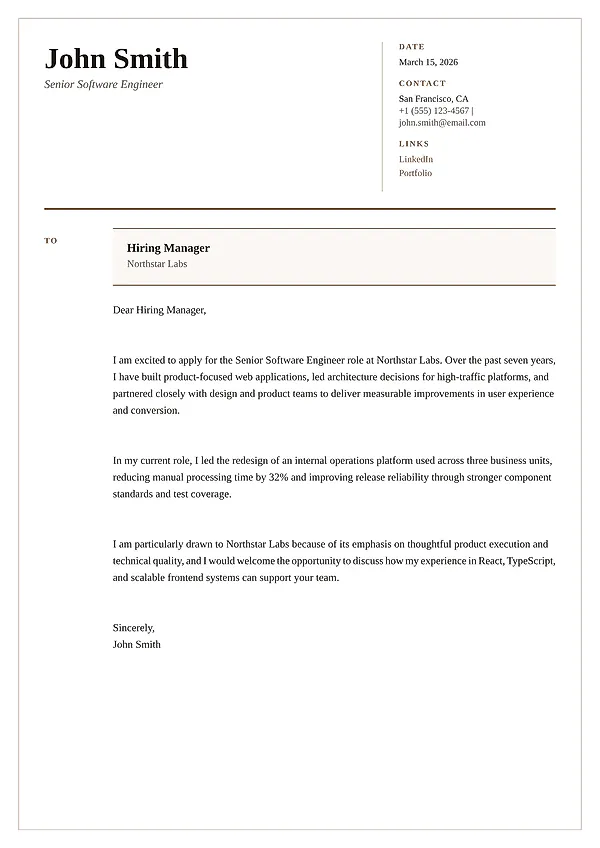
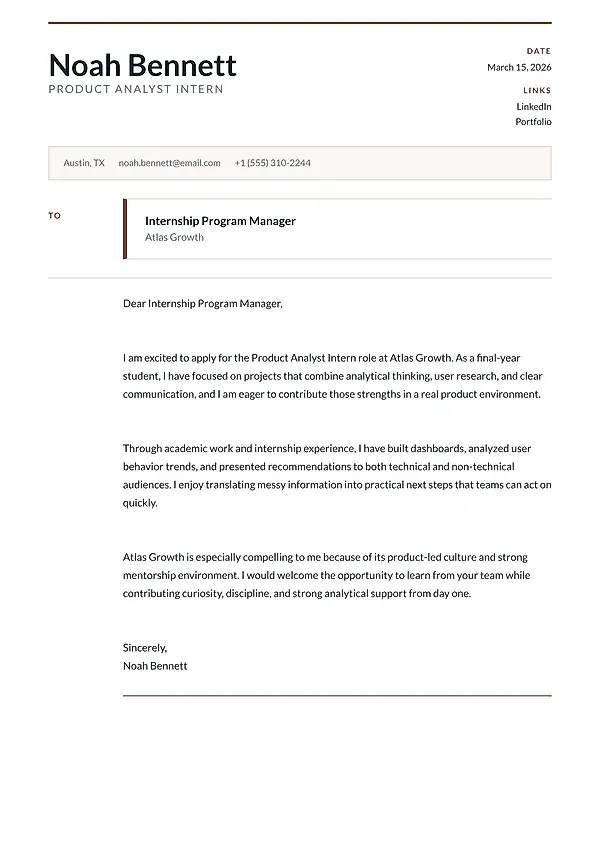
Create a cover letter from your resume. Reuse relevant job titles, skills, achievements, and experience.
Match the job description. Generate content for the company, position, and required qualifications.
Edit and download the PDF. Choose a matching cover letter template and edit every paragraph.
What a cover letter should add
A useful cover letter does not repeat every resume bullet. It selects the most relevant experience, connects it to the employer's needs, and gives context that a short resume cannot include.
Open with the role and a specific reason for the conversation—not a generic statement of excitement.
Choose one or two pieces of evidence instead of retelling the entire resume in paragraphs.
Explain career changes, unusual paths, motivation, or domain interest when the resume cannot do it alone.
Close with confidence and a useful next step, then keep the whole letter to a readable length.
AI cover letter builder features
Start with your resume and the target job, generate an editable cover letter, personalize each paragraph, and choose a design that matches your resume.
Use job titles, skills, experience, and achievements already included in your resume.
Use the job description to focus the opening, evidence, and motivation on the role at hand.
Generate an opening, experience paragraph, motivation paragraph, and closing for the target position.
Pair the letter with a resume design that shares the same header, type, and visual tone.
Improve the opening, evidence paragraph, motivation, and close without regenerating the whole letter.
Review length, specificity, repetition, tone, and whether every claim is supported by the resume.
How it works
Add the role, choose the most relevant experience, explain your motivation, and edit the finished letter before you download it.
Open with the exact position and one specific thread that connects your background to it.
Use one or two examples that prove the most important part of your fit.
Show why this work, company, product, customer, or transition makes sense for you now.
Remove repetition, keep the tone natural, and finish with a matching professional layout.
More resume and career tools
Compare your resume with a job description, create an editable cover letter, and generate interview questions for the target role.
Frequently asked questions
Learn what the tool creates, what information it checks, how to use it, and which results require your review.
Not every employer does, but a good cover letter is valuable when the application asks for one, the role is competitive, your path needs context, or your motivation is part of the fit.
Aim for roughly 250–400 words in three to five short paragraphs. Use only the space needed to make a clear argument.
No. Select the most relevant experience, explain why it matters for this role, and add context the resume cannot carry. The two documents should support each other without duplicating the same content.
Keep a reusable structure, but tailor the role, company context, selected evidence, and motivation. Generic letters are easy to spot because they could be sent anywhere.
Yes. Matching headers, type, color, and spacing make the application feel intentional and reduce visual friction.
Free to start
Use your resume and the job description to generate an editable cover letter, personalize the message, and export a matching professional PDF.